Brazil Gives Esports Legal Status Under New Decree
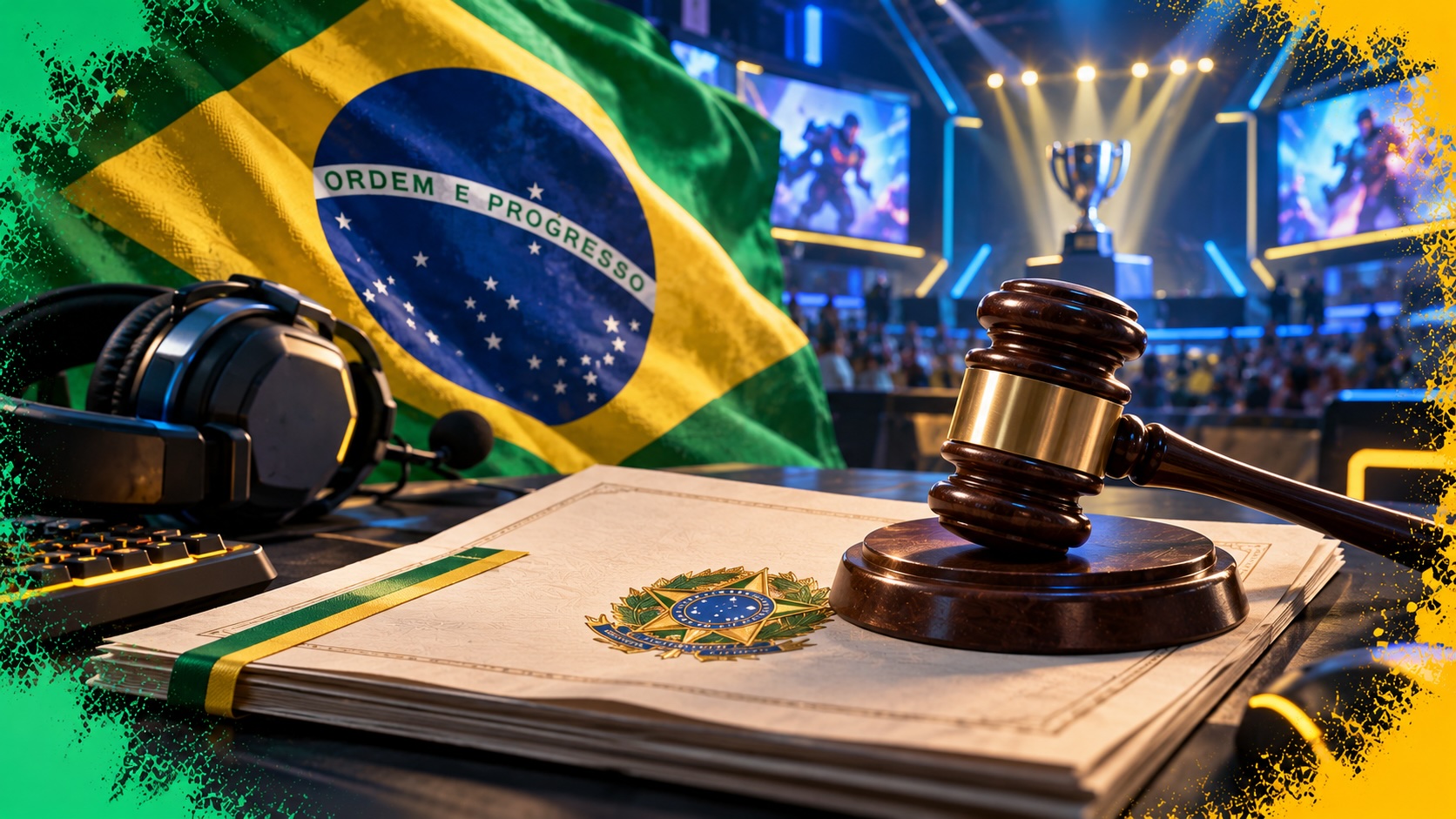
Brazil has recognised esports as a sporting activity under a decree signed Oct. 14, 2026. The measure does not guarantee public funding or state control.
Brazil has recognised esports as a sporting activity under Decree No. 13,138, signed by President Luiz Inácio Lula da Silva on Oct. 14, 2026. The decree places competitive gaming within the country’s sports administration and regulates the 2024 Legal Framework for Games.
Law No. 14,852, sanctioned in May 2024, classifies video games as audiovisual works and cultural products. It allows game companies to seek support through government programmes and apply for lower-cost credit.
Article 20 of the decree defines esports as an individual or team sporting activity played through digital games with established rules. Article 21 allows esports organisations to join the National Sports System, known as Sinesp, and take part in public policies covering athlete development, tournaments, scientific research, competition integrity and social inclusion.
Cadu Albuquerque, Brazil’s national esports director, said the decree creates a legal basis for public policy but does not provide automatic access to subsidies or give the state control over esports management.
“The decree establishes a legal foundation for integrating electronic sports into public sports policies, but it should not be confused with the automatic granting of public subsidies or state takeover of esports management,” Albuquerque said.
Access to public money will depend on specific programmes, eligibility rules, available budgets and other legal requirements. The decree does not directly guarantee scholarships, tax incentives or other financial support, according to Albuquerque.
The recognition does not require established competitions to change their formats, schedules or commercial arrangements. Publisher intellectual-property rights and existing business models remain protected, including Riot Games’ Brazilian League of Legends Championship and Ubisoft’s regional Rainbow Six Siege circuit.
“The recognition does not mean that consolidated competitions need to alter their formats, calendars, or commercial models, nor does the Ministry of Sport intend to interfere in competitive decisions,” Albuquerque said. He identified possible areas for cooperation between public institutions and the esports industry, including grassroots player development, gender inclusion, academic research and efforts against match-fixing and harassment.
Event organisers such as ESL FACEIT Group and BLAST could work with public institutions on workforce training and community programmes when holding tournaments in Brazil. Hosting a commercial event in the country does not by itself qualify an organiser for government funding.
The decree also covers Brazil’s video game development industry. Domestic developers can seek federal tax incentives, while game-production companies may apply for lower-interest credit backed by the Ministry of Science, Technology and Innovation and the Audiovisual Sector Fund.
The federal government has allocated an initial R$1.4 million, about $280,000, to Game Brasil, a public platform intended to catalogue and promote games made in Brazil. The Ministry of Education is due to establish undergraduate gaming programmes at five federal universities, with 230 accredited places.
Follow our gaming coverage and visit our game gift marketplace for available digital products.
Articles by this author